5 Important Google Algorithm Updates Every SEO Beginner Should Know
Introduction
Search Engine Optimization (SEO) helps businesses improve their visibility on Google and connect with people searching for their products or services. Google uses several ranking systems to identify useful and relevant pages for each search query. Understanding Google algorithm updates can help website owners develop better SEO strategies and create a positive experience for visitors.
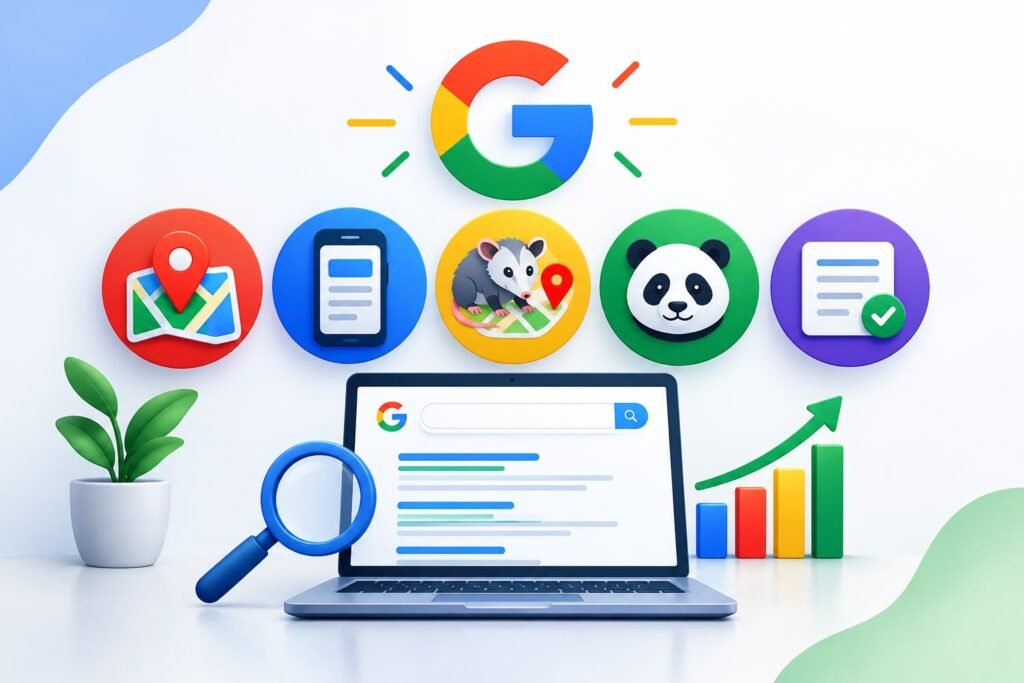
From improving local search results to encouraging people-first content, different Google updates have influenced how websites approach search optimization. In this article, we will explore five well-known updates: Google Pigeon, the Mobile-Friendly Update, Google Possum, Google Fred, and the Helpful Content System.
1.Google Pigeon: Making Local Searches More Relevant
Introduced in 2014, Google Pigeon was an update designed to improve local search results. It strengthened the connection between Google’s traditional web search signals and the signals used to deliver geographically relevant results.
For local businesses, this update highlighted the importance of having an online presence that clearly communicates their services and location.
How Does Google Pigeon Affect Local SEO?
* Helps make local search results more relevant to users.
* Emphasizes the relationship between traditional SEO and local search.
* Highlights the value of accurate business information and local relevance.
SEO Tip: If you offer digital marketing services in Kerala, create useful pages that explain your services and target audience. Use location-specific keywords naturally and keep your Google Business Profile accurate and up to date, where applicable.
Related Keywords: Google Pigeon SEO Update, Local SEO Strategy, Local Search Optimization, Location-Based Keywords, Google Business Profile Optimization
2. Mobile-Friendly Update: Building a Better Mobile Experience
Google launched its Mobile-Friendly Update in 2015 to give mobile-friendly pages an advantage in mobile search results. The update reflected the growing number of people accessing websites through smartphones.
A website that works well on mobile devices allows visitors to read information, explore services, and navigate pages without unnecessary difficulty.
Why Does Mobile Optimization Matter?
* Makes website content easier to access on smartphones.
* Supports clear navigation across different screen sizes.
* Helps provide a smoother browsing experience for mobile visitors.
SEO Tip: Choose a responsive website layout, use readable text, optimize images, and ensure that important buttons and navigation elements work properly on smaller screens. You can also monitor website performance using Google Search Console and PageSpeed Insights.
Related Keywords: Google Mobile-Friendly Update, Mobile SEO Optimization, Responsive Website Design, Mobile Usability, Website Performance.
3. Google Possum: Understanding Local Search Visibility
Google Possum is the unofficial name used by SEO professionals for a local search update observed in 2016. It affected how certain businesses appeared in local search results, with factors such as the searcher’s location and business proximity influencing visibility.
This update demonstrated that two people searching for similar services in different locations might see different local results.
What Can Businesses Learn from Google Possum?
* Local search visibility may vary depending on the searcher’s location.
* A business’s proximity to the search location can matter.
* Similar business listings and their physical locations can influence which results appear.
SEO Tip: Maintain accurate business details, create genuinely useful local landing pages, and develop a consistent online presence. Avoid creating duplicate business listings or adding locations where your business does not genuinely operate.
Related Keywords: Google Possum Update, Local SEO Ranking Factors, Local Business Visibility, Geographic Search Results, Local Search Strategy.
4. Google Fred: Why Valuable Website Content Matters
Google Fred is an unofficial name associated with a ranking update reported in 2017. SEO professionals observed that some affected websites relied heavily on low-value content and aggressive advertising, often prioritizing monetization over the visitor’s needs.
The broader lesson is that a website should offer genuine value rather than publishing pages solely to attract clicks or advertising revenue.
How Can You Improve Content Quality?
* Publish original information that addresses real user questions.
* Make articles informative, clear, and easy to navigate.
* Avoid excessive advertising that interferes with reading.
* Remove or improve pages that offer little value to visitors.
SEO Tip: Before publishing an article, ask whether it answers the reader’s question thoroughly. Use relevant keywords where they fit naturally, but avoid keyword stuffing and unnecessary repetition.
Related Keywords: Google Fred Update, SEO Content Quality, Website Content Optimization, Low-Value Content, Organic Search Best Practices.
5. Google Helpful Content System: Prioritizing Readers
Google introduced the Helpful Content System in 2022 to help surface original, useful content created primarily for people rather than pages designed mainly to manipulate search rankings. In March 2024, Google incorporated the system’s capabilities into its core ranking systems.
For bloggers, marketers, and business owners, the main lesson is to create content that meets the audience’s needs and provides meaningful information.
What Makes Content Helpful for SEO?
* Answers the reader’s question directly.
* Offers original explanations, examples, or insights.
* Demonstrates appropriate knowledge and experience.
* Provides accurate information and a clear reading experience.
* Helps users achieve the purpose behind their search.
SEO Tip: Identify your target audience before choosing a topic. Research relevant keywords, understand search intent, and organize your article with descriptive headings. Use AI tools responsibly if needed, but make sure the final content is accurate, useful, and meaningfully developed.
Related Keywords: Google Helpful Content System, People-First Content, SEO Content Strategy, Search Intent Optimization, Helpful Website Content.
Conclusion
Learning about Google algorithm updates can help beginners understand the different elements of an effective SEO strategy. Google Pigeon and Google Possum are associated with local search, the Mobile-Friendly Update focused on mobile usability, Google Fred became associated with concerns about low-value content and aggressive advertising, and the Helpful Content System encouraged content that serves readers.
Instead of chasing rankings alone, businesses should focus on building websites that are helpful, accessible, trustworthy, and relevant to their audiences.. Combining thoughtful keyword research with quality content, local SEO practices, and a good mobile experience can support long-term organic search visibility.