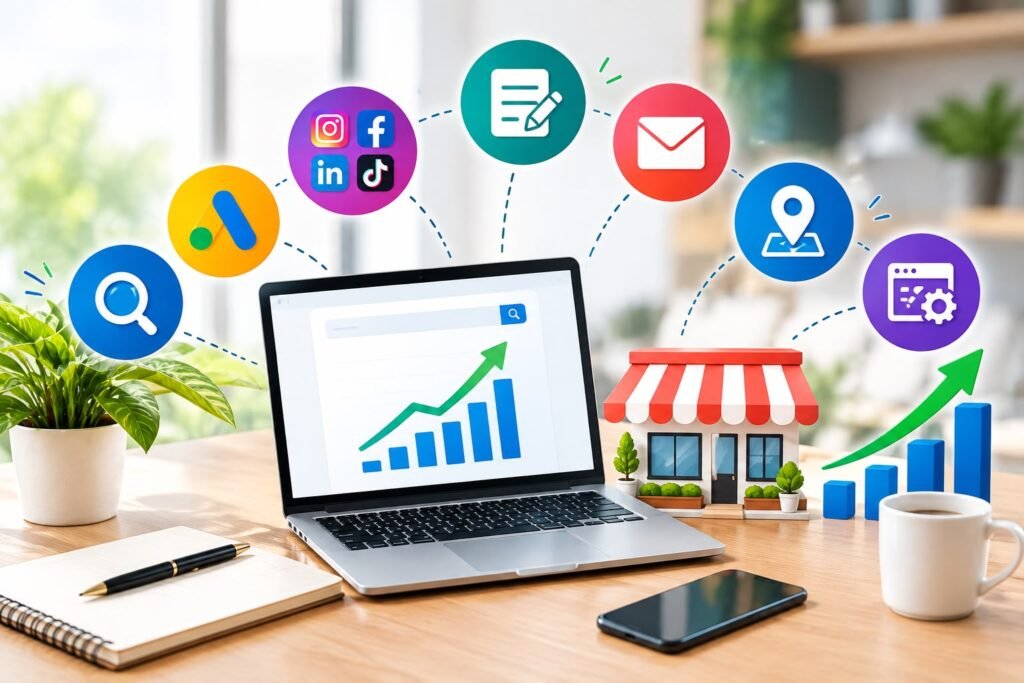
7 Digital Marketing Strategies Every Small Business Should Consider
For a small business, having a good product or service is only part of the journey. Today, people use the internet to discover new businesses, research products, compare different options, and decide what to buy. This makes your online presence an important part of reaching potential customers.
A well-planned digital marketing approach can help small businesses get noticed, connect with the right audience, generate leads, and build steady growth over time. Instead of trying every marketing method at once, businesses can focus on strategies that match their goals and target customers.
Here are 7 digital marketing strategies that small businesses can consider:
1. Search Engine Optimization (SEO)
SEO helps businesses improve their visibility on search engines and reach people who are actively looking for the products or services they offer.
For instance, if you run a local digital marketing agency, you may want your website to show up when people search for terms such as “digital marketing agency near me” or “SEO services for small businesses.”
A strong SEO approach can involve several important areas, including:
* Keyword research and targeting
* Optimizing website pages
* Technical SEO improvements
* Creating useful and relevant content
* Local search optimization
* Improving website speed and performance
* Building quality backlinks
Unlike paid ads, SEO helps your website gain attention naturally through search engine results. Although it takes time and consistent effort, it can help a business attract relevant visitors and build a stronger online presence over the long term.
2. Social Media Marketing
Social media gives small businesses a simple way to reach their audience, communicate with customers, and build a recognizable brand online.
Platforms like Instagram, Facebook, LinkedIn, and other social networks can help businesses promote their products or services, share useful information, introduce their brand, and stay connected with their followers.
However, effective social media marketing is about more than simply posting every day. The content you share should be useful, engaging, and consistent with your brand’s personality.
Some content ideas include:
* Helpful and educational posts
* Behind-the-scenes moments
* Customer experiences and testimonials
* Product or service features
* Short videos and reels
* Useful industry-related tips
* Special offers and business updates
Posting consistently while actively responding to your audience can help create stronger connections and encourage people to trust and engage with your brand.
3. Content Marketing
Content marketing is about creating helpful and meaningful content that attracts the right audience and gives them useful information.
Rather than focusing only on promoting your products or services, you can share content that addresses common questions, solves problems, and provides information your potential customers are looking for.
Some popular content formats include:
* Blog posts and articles
* Helpful guides and tutorials
* Videos
* Infographics
* Case studies
* Social media posts
* Frequently asked questions
Useful and well-planned content can improve your SEO efforts, demonstrate your knowledge, build credibility, and help potential customers feel more confident when choosing your business.
4. Google Business Profile and Local Marketing
If your business mainly serves customers in a particular area, focusing on local digital marketing can help you reach people who are searching for businesses nearby.
A properly optimized Google Business Profile makes it easier for potential customers to discover your business and find useful details such as your address, services, working hours, website, photos, and reviews.
Local SEO can also improve your chances of appearing in searches that include terms like:
* “near me”
* “in [city]”
* “best [service] near me”
Keep your business name, address, phone number, website, and other important details accurate and consistent across the platforms where your business is listed. This helps customers find the correct information and makes your online presence more reliable.
5. Paid Advertising
Organic marketing usually takes time to build results, whereas paid advertising can help businesses reach potential customers more quickly and with greater targeting.
Platforms such as Google Ads and social media advertising allow businesses to show their ads to specific groups based on factors like location, interests, demographics, and what people are searching for online.
Paid advertising can be useful for:
* Bringing more visitors to your website
* Promoting products or services
* Finding new leads
* Increasing customer enquiries
* Highlighting special deals or promotions
* Reaching people who have previously interacted with your business
To get better results from paid campaigns, it is important to set a clear goal, understand your target audience, create relevant ads, and regularly review the campaign performance.
6. Email Marketing
Email marketing is still a practical way for businesses to stay connected with current customers and potential buyers.
Rather than depending only on social media platforms to reach your audience, email allows you to communicate directly with people who have subscribed to receive updates from your business.
Businesses can use email campaigns to share:
* New products or services
* Special deals and promotions
* Useful tips and advice
* Company news and updates
* Regular newsletters
* Educational and informative content
When emails are relevant, helpful, and personalized to the interests of your audience, they can encourage people to stay connected with your brand and engage with your business.
7. Website Optimization and Conversion Strategy
Your website is a key part of your overall digital marketing efforts. Bringing people to your site is important, but it is equally important to make their experience simple and guide them toward the right action.
A business website should ideally include:
* Simple and clear navigation
* A mobile-friendly design that looks and functions smoothly on different screen sizes
* Quick page loading
* Easy-to-read and useful content
* Clear calls-to-action
* Simple contact or enquiry forms
* Detailed information about your products or services
* Reviews, testimonials, or other trust signals
Buttons such as “Get Started,” “Request a Quote,” “Book a Consultation,” or “Contact Us” can make it easier for visitors to know what to do next and take the step toward becoming a potential customer.
How to Choose the Right Digital Marketing Strategy
Every small business has its own goals, audience, and challenges, so there is no need to use every digital marketing platform or strategy at the same time.
Before deciding where to invest your time and money, consider a few important things:
Your target audience: Who are you trying to reach, and what are they looking for?
Your goals: Are you looking to generate more leads, increase sales, receive more enquiries, attract website visitors, or improve brand awareness?
Your budget: How much can you realistically spend on marketing on a regular basis?
Your current online presence: Which areas are already performing well, and where could you make improvements?
Understanding these factors can help you choose the right marketing channels and build a practical digital marketing plan that fits your business and supports your goals.
Final Thoughts
No two small businesses are exactly alike. Your marketing approach should depend on your customers, business goals, available resources, and what you want to achieve. There is no need to be active on every digital platform from the beginning.
Before choosing your marketing channels, take some time to understand:
Who you want to reach: Identify the people most likely to need or be interested in your products or services.
What you want to achieve: Decide whether your main focus is getting more enquiries, generating leads, increasing sales, bringing visitors to your website, or making more people aware of your brand.
What you can afford: Set a realistic marketing budget that you can maintain consistently without putting unnecessary pressure on your business.
Where you currently stand online: Look at your existing website, social media profiles, search visibility, and other digital channels to see what is working and what could be improved.
Once you have a clear picture of these areas, you can choose marketing methods that make sense for your business and create a strategy that you can realistically maintain over time
Take the Next Step Today
Contact us for a personalized digital marketing strategy tailored to your business goals.